What a small business website must do in the first few seconds, the six pages you need, the features that bring in customers, and how to choose between a builder and a professional.
A small business website has one job: to turn a stranger who has never heard of you into someone who calls, books or buys. It does not need to be big or clever. It needs to answer a visitor's questions quickly and make the next step obvious.
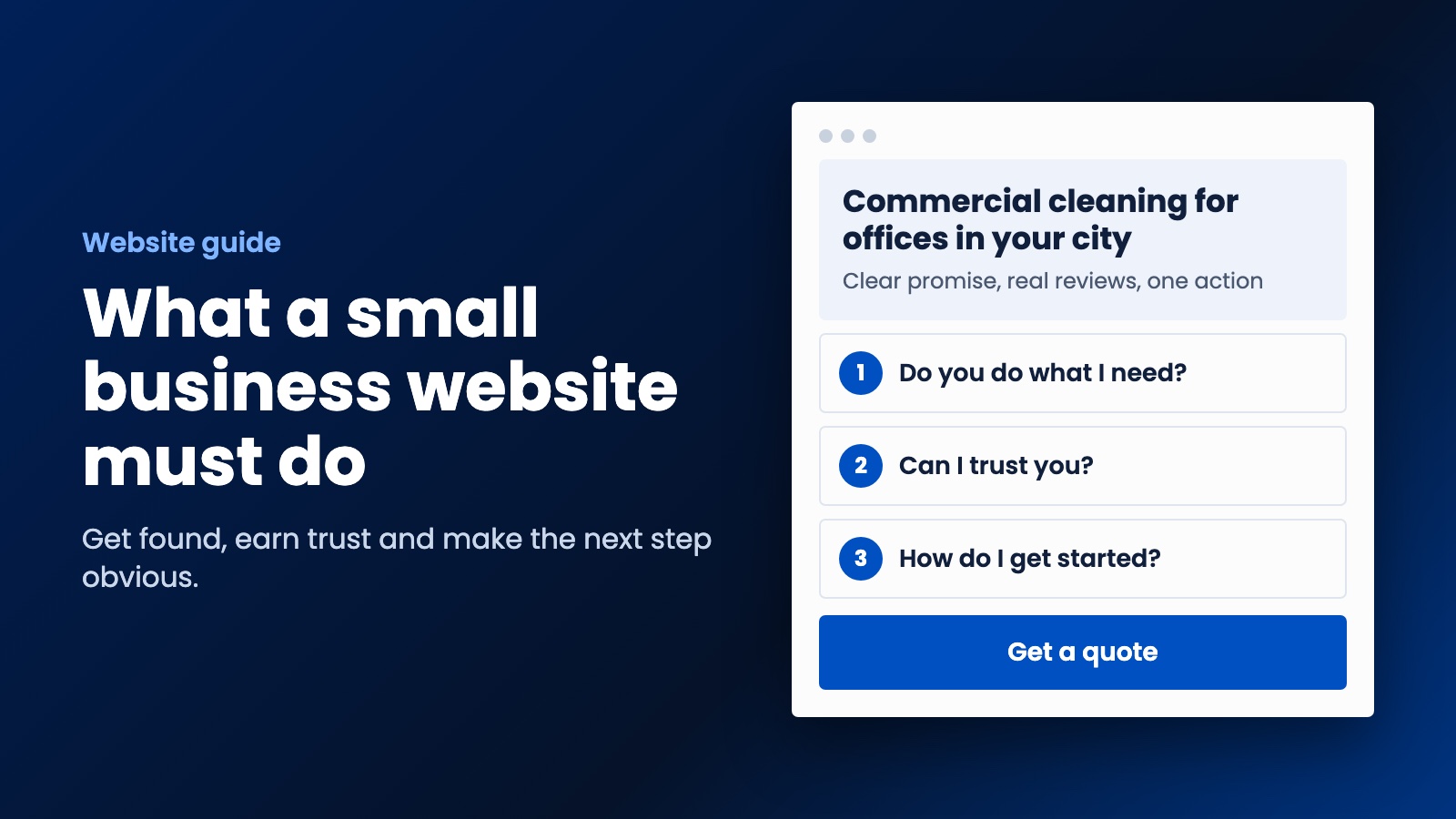
Many sites miss this because they are built around the business rather than the customer. They open with a welcome message and a company history, while the visitor is asking three simpler questions: Do you do what I need? Can I trust you? How do I get started? Here is how to build a site that answers all three.
What your small business website must do in the first few seconds
Look at your home page as a new visitor would, on a phone, before you scroll. You should be able to see:
- What you do and who it is for. "Commercial cleaning for offices in Denver" beats "Excellence in every detail."
- One main action. Choose the step that matters most, such as "Get a quote," "Book online" or "Call now."
- A reason to believe you. A review, a rating, a license, or a well-known client name is enough to start.
If a friend cannot tell you what your business does after five seconds on the page, rewrite the headline before you change anything else.
The pages you actually need
Most small businesses can start with six pages. More pages only help when each one answers a question that people really ask.
- Home. Your promise, your main services, proof and one clear action.
- Services. Give each main service its own page. Someone searching for roof repair should land on a page about roof repair, not a list of everything you do.
- About. Real people, real photos and why you do this work. People buy from people, especially for services.
- Reviews or results. Real customer words, with names where you have permission.
- FAQ. Answer what customers ask on the phone. It saves you time and removes doubts before they contact you.
- Contact. A short form, a phone number that can be tapped, your hours and your service area.
Five features that bring in customers
Good design earns attention, but these features are what turn a visit into an enquiry:
- Short forms. Ask only for what you need to reply. Every extra field gives people a reason to leave.
- Online booking. If your work runs on appointments, let people choose a time without calling you.
- Calls to action on every page. Visitors often arrive on inner pages from Google, so never make them hunt for the next step.
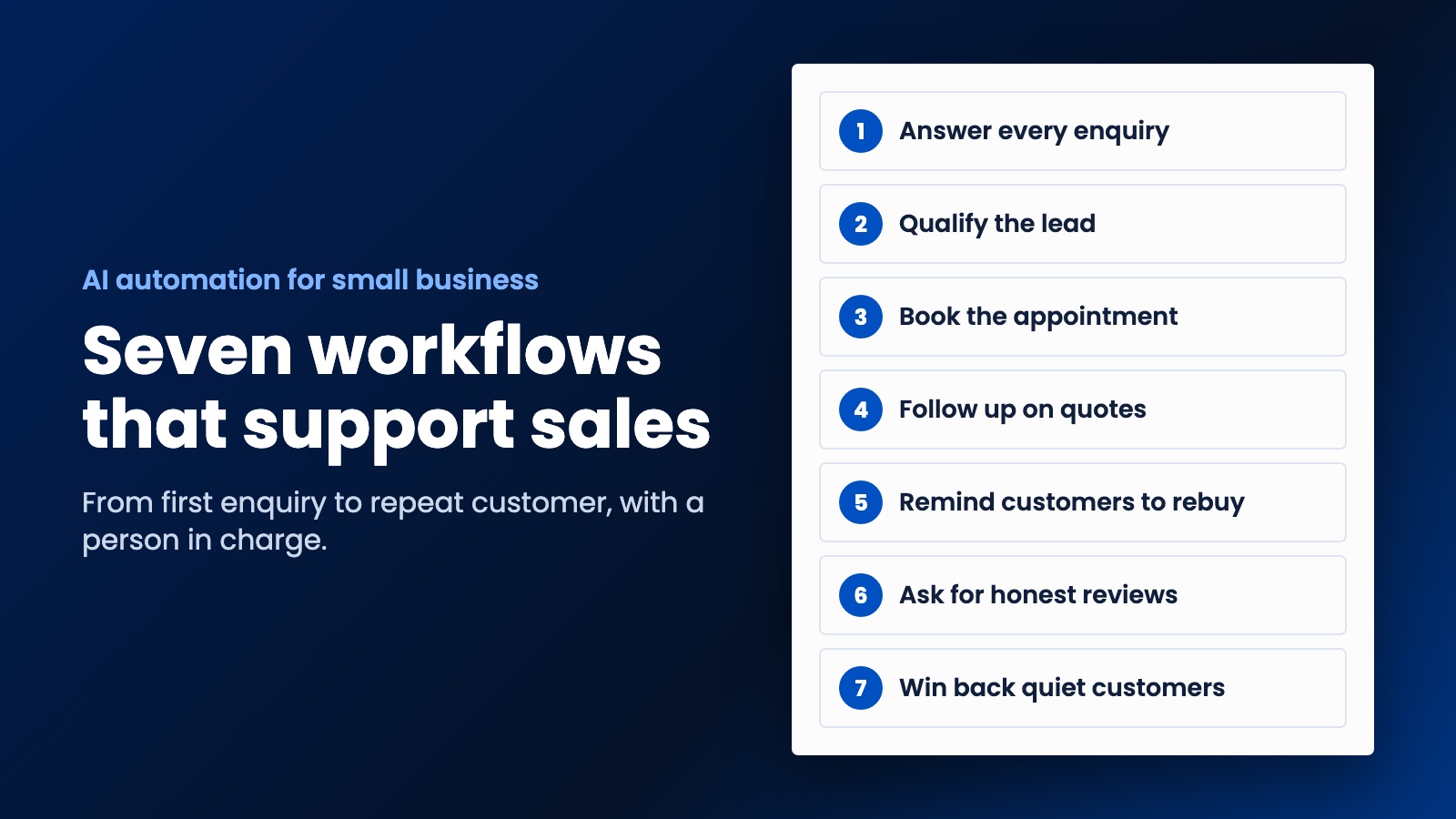
- Automatic follow-up. Send an instant confirmation, then a reminder if there is no reply. We include this kind of automation in the websites we build, because many leads go cold simply because nobody followed up.
- Analytics. Track forms sent and calls made, not just visitors. Without this you are guessing about what works.
Speed, mobile and security are the basics
These are not extras. Many small business customers will find you on a phone, often while comparing several options.
- Speed. Google's Core Web Vitals say the main content should load within 2.5 seconds, the page should respond to a tap within 200 milliseconds, and the layout should not jump around as it loads. You can test yours with our free Page Speed Test.
- Mobile first. Test on your own phone. Buttons should be easy to tap, text easy to read, and no sideways scrolling.
- Security. Your site needs HTTPS, or browsers will warn visitors it is not secure. Our SSL Checker takes seconds to run.
- Accessibility. People with disabilities are customers too. In the US, the Department of Justice has guidance on web accessibility for businesses open to the public. Good contrast, readable text, image descriptions and keyboard access are a sensible place to start.
Help Google understand your business
You do not need tricks. You need clear pages that match what people search for:
- Give every page a unique title and description. Our SEO Analyzer shows what is missing.
- Use one clear heading on each page, written the way a customer would say it.
- Write about your services in plain words, including the problems you solve.
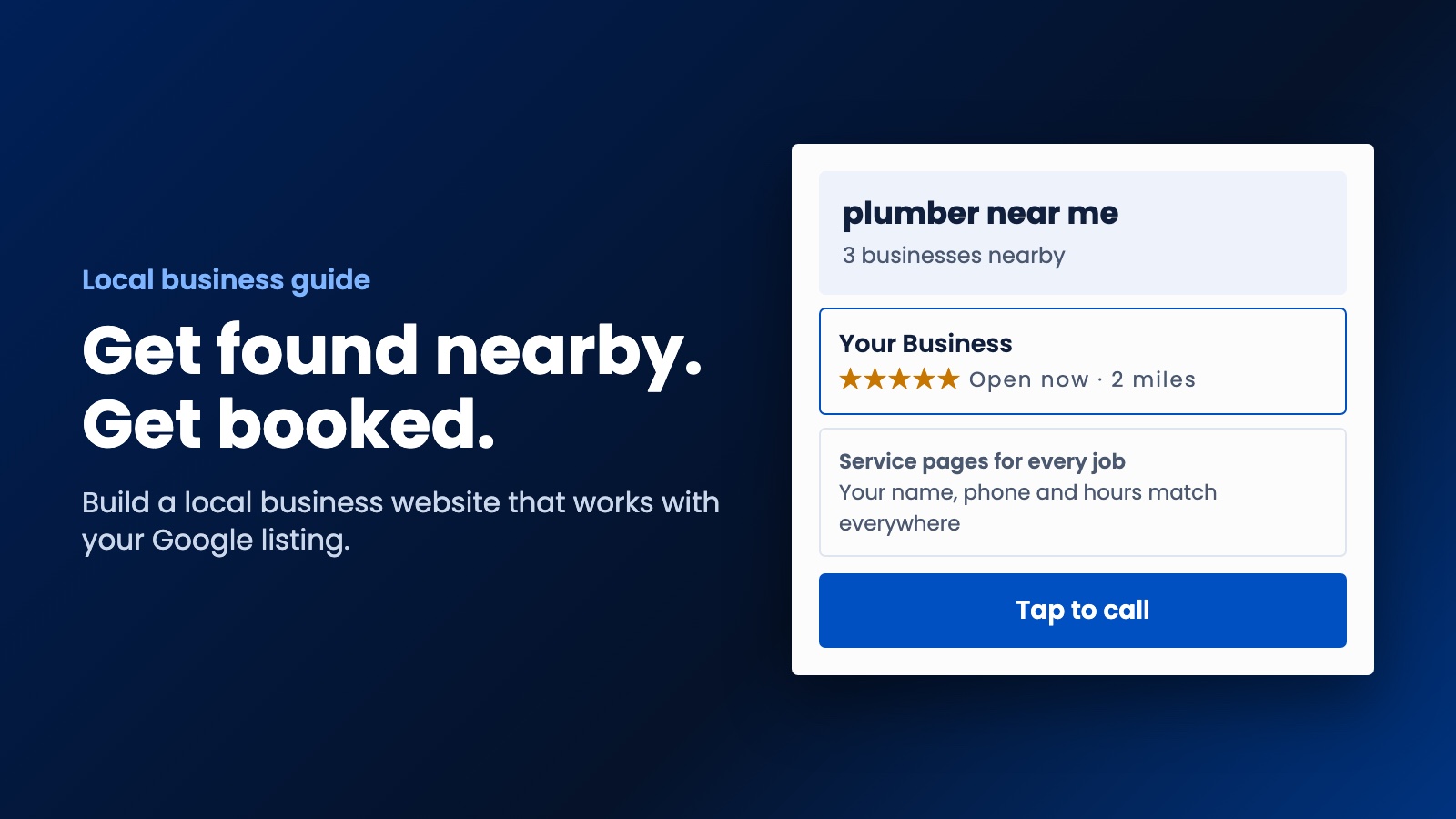
- If you serve customers in a specific area, say so and build on it. Our guide to local business websites covers this in detail.
Website builder or professional developer?
This is the first decision for most owners, and there is no single right answer.
A website builder can suit you if you are testing an idea, you need something simple quickly, you are comfortable doing the writing and setup yourself, and your site will not need custom features.
A professional is usually the better choice if your website is meant to be a main source of customers, you need booking, payments or connections to other software, or your time is better spent running the business.
Whichever you choose, check three things first: Can you edit your own content? Can you move the site elsewhere if you need to? And is the domain name registered in your name? That last point matters more than most owners realize, because your domain is what your customers and search rankings are tied to.
Seven mistakes to fix today
- A headline that describes your values instead of what you do.
- A phone number that cannot be tapped on a phone.
- A slider of images that moves before anyone can read it.
- Stock photos where your own team and work should be.
- Forms with no confirmation, so people do not know if it worked.
- No reviews anywhere near the point where people decide.
- Old information, such as last year's hours or a service you no longer offer.
A website is never really finished
Launching is the start. Software needs updates, backups need checking, and your best new page ideas will come from the questions customers ask you. Each time someone asks a good question, add the answer to your site. Over time, this builds into something competitors cannot easily copy.
Want a second opinion on what you have now? Run your address through our free tools, or see how we design websites around the way your customers decide. If you would rather have us handle it, tell us about your business and we will reply with a clear plan.
Need help putting this into practice?
Our team can do it for you — a clear plan and price within 24 hours, no obligation.