We built a website, iOS and Android apps and automation for a cleaning company in Australia. Here is the thinking behind it, and how the same idea could work for your business.
Most cleaning company websites do one thing. They sit online and wait. Somebody finds the site, maybe fills in a form, and the owner calls them back when there's a spare minute between jobs.
When we took on a website for a cleaning company in Australia, we didn't want to build another one of those. We built a cleaning company website with iOS and Android apps and enough automation behind it to keep working when the owner is busy, which in cleaning is pretty much always. This article walks through how we thought about it, because the thinking is more useful to you than the finished screens.
The problem with a normal cleaning company website
Think about how a homeowner hires a cleaner. They get tired of doing it themselves, they search on their phone, they look at two or three companies, and they call whoever seems decent and answers first. That part is hard to win, and you pay for it, either with your time or with your ad budget.
Then the clean goes well. The customer's happy. And three months later the house is a mess again, they can't remember your name, and they go back to Google. You just paid to win the same customer twice, and this time you might lose them to someone else.
That's the leak we wanted to plug. A house doesn't stay clean. Nobody in this business should be treating a customer as a one-off, yet plenty of websites are built as if they are.
What we built for them
There were three pieces, and each one has its own job.
The website brings in new work. Its whole purpose is to get a house owner to pick up the phone. So we kept the marketing running automatically, rather than leaving it as something the owner has to remember on a Sunday night.
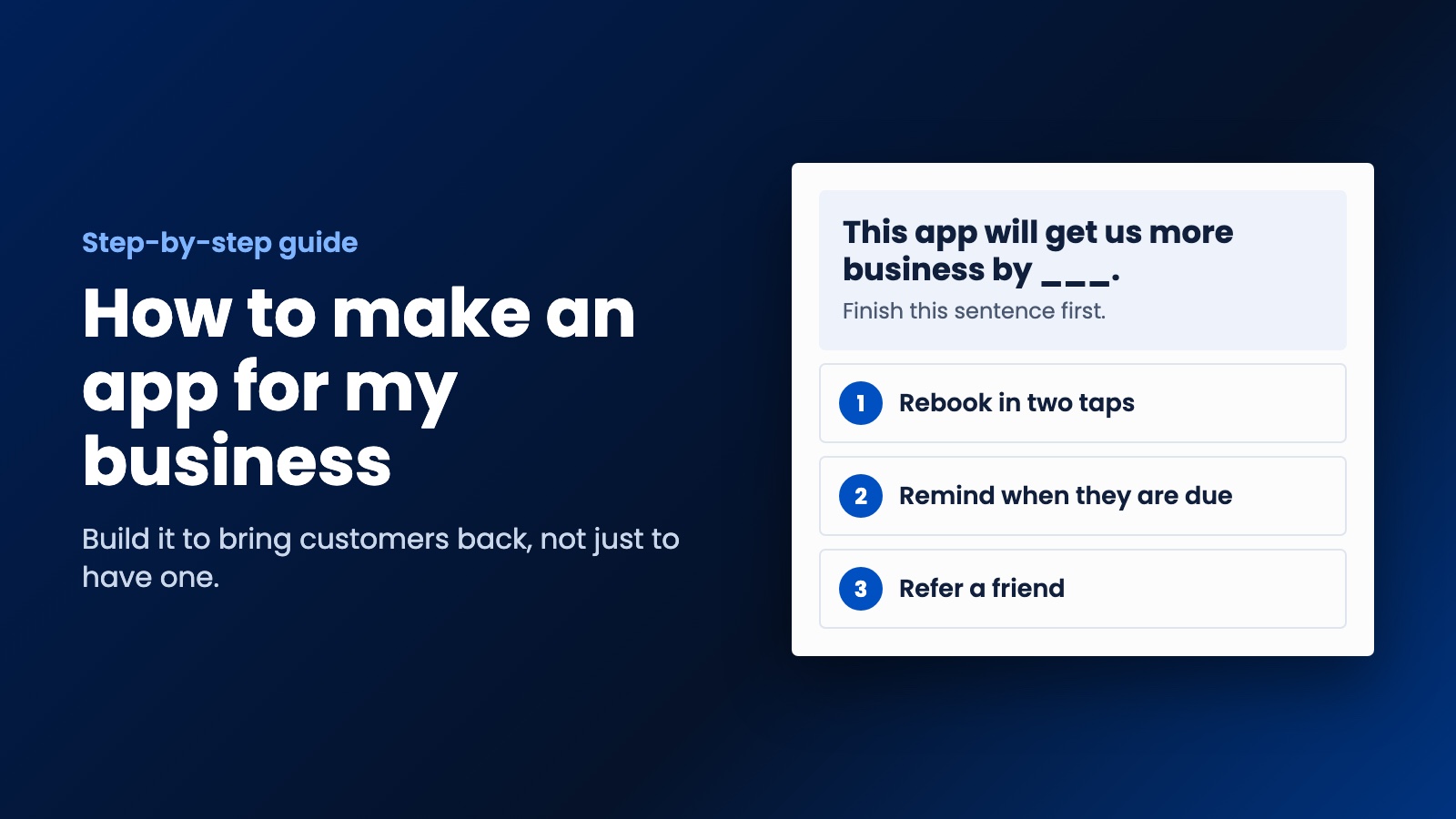
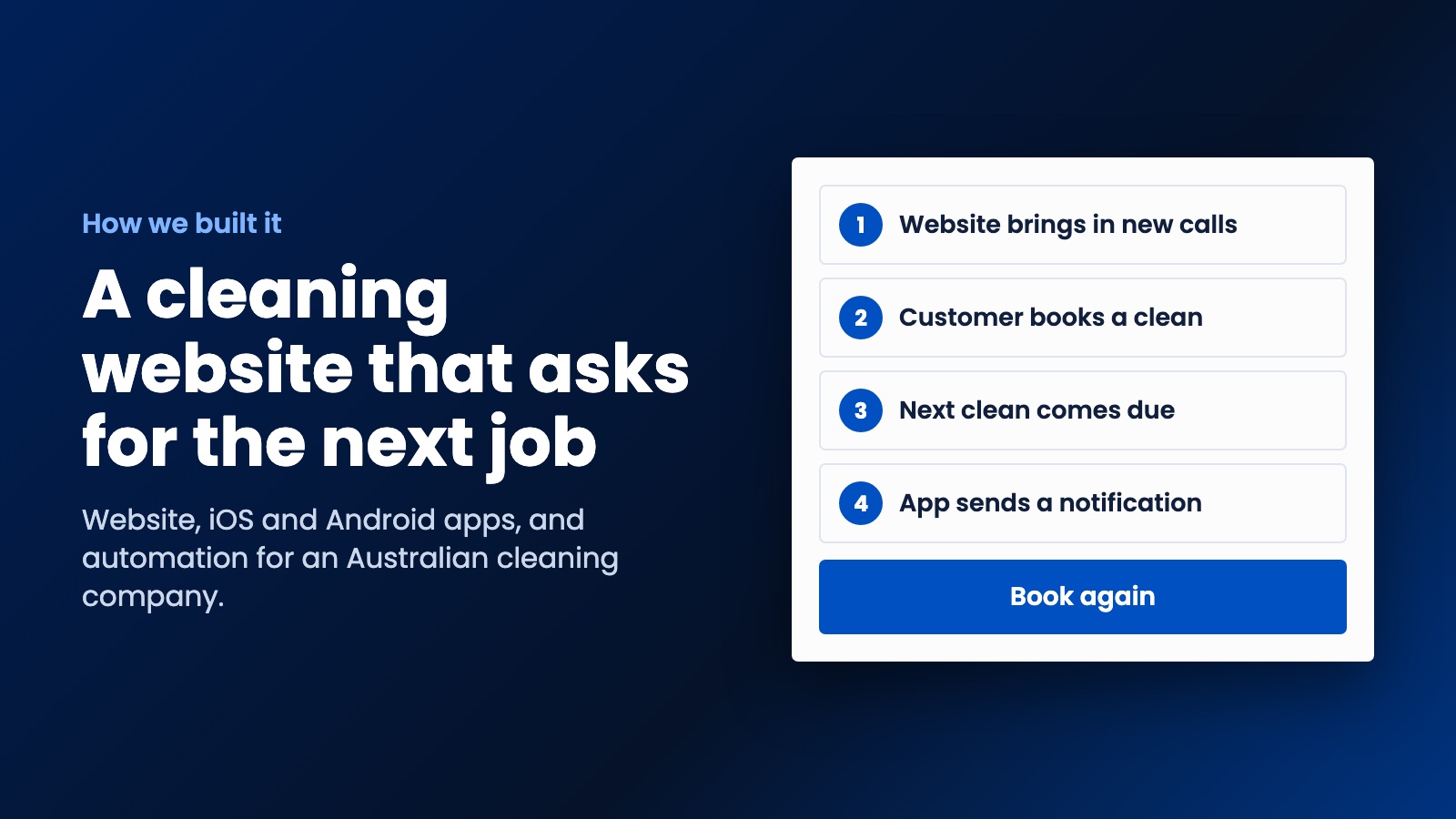
The automation brings customers back. Once somebody books a clean, the system knows it happened. When their next clean is due, they get a notification. They don't have to remember you or go searching again. The reminder turns up at about the time they're starting to notice the dust.
The iOS and Android apps keep you on the customer's phone. A regular customer is exactly who an app is for, because they'll come back to it again and again. Someone hiring you once a year wouldn't bother to install it, and that's fine. The website is there for them.
Put together, it stops behaving like an online brochure and starts behaving like a salesperson who never forgets to follow up. That's what we mean when we call a site a sales machine. It's a big phrase, so it's only fair to explain what's behind it, and that's all it is: a system that asks for the next job so that you don't have to.
Why the reminder matters so much
If you only take one idea from this article, take this one. Getting a stranger to trust you is hard. Getting a happy customer to book again is mostly a matter of asking at the right time.
Most small business owners know this already. They just don't have time to do it. You're not going to sit down every Friday, work out who's due for a clean, and text them one by one. Maybe you'd do it for a couple of weeks. Then a busy patch hits and it stops. A computer doesn't have busy patches, and that's really the whole argument for automating it.
It's a small idea, too. There's no clever trick in it. The clever part is making sure it actually happens, every time, for every customer.
Would this work for your business?
It works best where the job comes back around on its own. Cleaning is an obvious one, but so are lawn care, pest control, pool servicing, window cleaning, car detailing, hair salons, dentists and physios. If your customers need you again in three months or twelve, you've got the same leak.
It works less well if people buy from you once in a blue moon. A roofer doesn't need a monthly reminder, and a wedding photographer certainly doesn't. Those businesses have other things to automate, like chasing up quotes, and we'd tell you so instead of selling you an app you don't need. If you're unsure, we've written a straight answer to whether your small business needs an app.
What we won't tell you
We're not going to put a number here saying this will double your bookings. We don't know your suburb, your prices, your competitors or how good your cleaners are, and anyone who gives you a percentage before they know those things is making it up.
What we can do is show you the plan. Before you pay for anything, we'll sit down with you and explain how your website would bring in calls, what would be automated, what you'd need apps for, and what you could skip. It's your business, so you get to poke holes in it. If the strategy makes sense to you, we go ahead. If it doesn't, you've lost nothing, and you'll still walk away with some ideas you can use.
Why this suits smaller businesses
The big franchises have marketing teams to do this sort of follow-up. A small operator has themselves, a phone and a van. Automation is one of the few places where the small guys get to punch above their weight, because the reminder that goes out for you looks exactly the same as the one that goes out for a national chain.
Most of the people we work with are owners like that, with small teams and no time to spare. We've kept our prices at a level that makes sense for them, and you can start small. Plenty of owners would be better off starting with the website and reminders, then adding apps once they've got regulars who'd use them.
If you want to see how it would look for you
You can read more about this kind of cleaning website and the website and app work we do. If you'd like to set up simple reminders yourself first, we've also put together a step-by-step guide to automatic rebooking reminders.
Or just tell us what your business does. We'll come back with a plan you can read and argue with, and we'll be straight with you if we think you don't need something.
Need help putting this into practice?
Our team can do it for you — a clear plan and price within 24 hours, no obligation.